Before launching a Corporate Social Responsibility (CSR) program, companies should ask one fundamental question: do we truly understand the needs of the communities around us? Without a clear answer, CSR initiatives can easily become ceremonial activities that look impressive in sustainability reports but fail to address the root causes of community challenges.
This is where the assessment stage becomes essential. In Social Work in the Industrial World: Strengthening Corporate Social Responsibility (2007), Edi Suharto emphasizes that effective CSR programs must be built on a thorough understanding of community conditions and needs rather than on assumptions made by the company. Four assessment methods are commonly used to build this understanding: social mapping, rapid assessment, focus group discussions (FGDs), and stakeholder mapping.
1. Social Mapping: Understanding Communities in Their Entirety
In simple terms, social mapping is the process of collecting, analyzing, and presenting information about a community’s social structure. It explores who lives in the area, their economic conditions, cultural values, local assets and resources, as well as the challenges they face.
Robert Chambers, one of the pioneers of this methodology, argued in Rural Development: Putting the Last First (1983) that external actors including companies often misunderstand rural communities because they rely solely on their own perspectives. Social mapping reverses this approach by encouraging practitioners to understand communities from the communities’ own point of view.
In Indonesia, Bambang Rudito and Melia Famiola, in CSR (Corporate Social Responsibility) (2013), describe social mapping as a fundamental step before companies particularly those operating in mining, oil and gas, and plantation industries design community development programs. Every community has unique social characteristics, making a one-size-fits-all approach ineffective.
In practice, social mapping serves as an umbrella framework that encompasses various data collection techniques, including the three methods discussed below: rapid assessment, focus group discussions (FGDs), and stakeholder mapping.
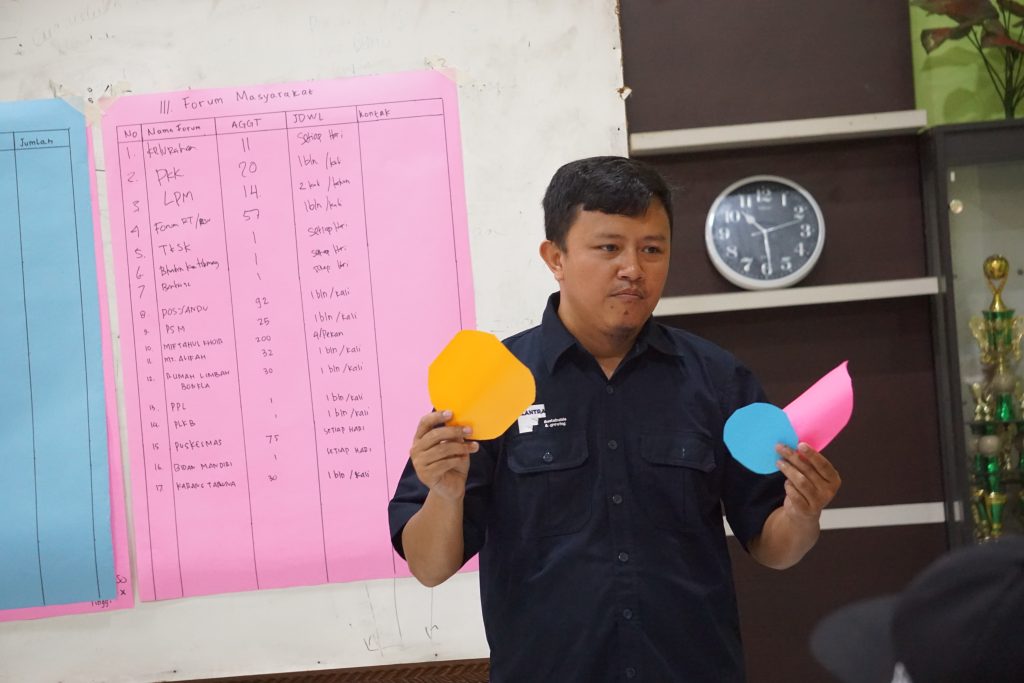
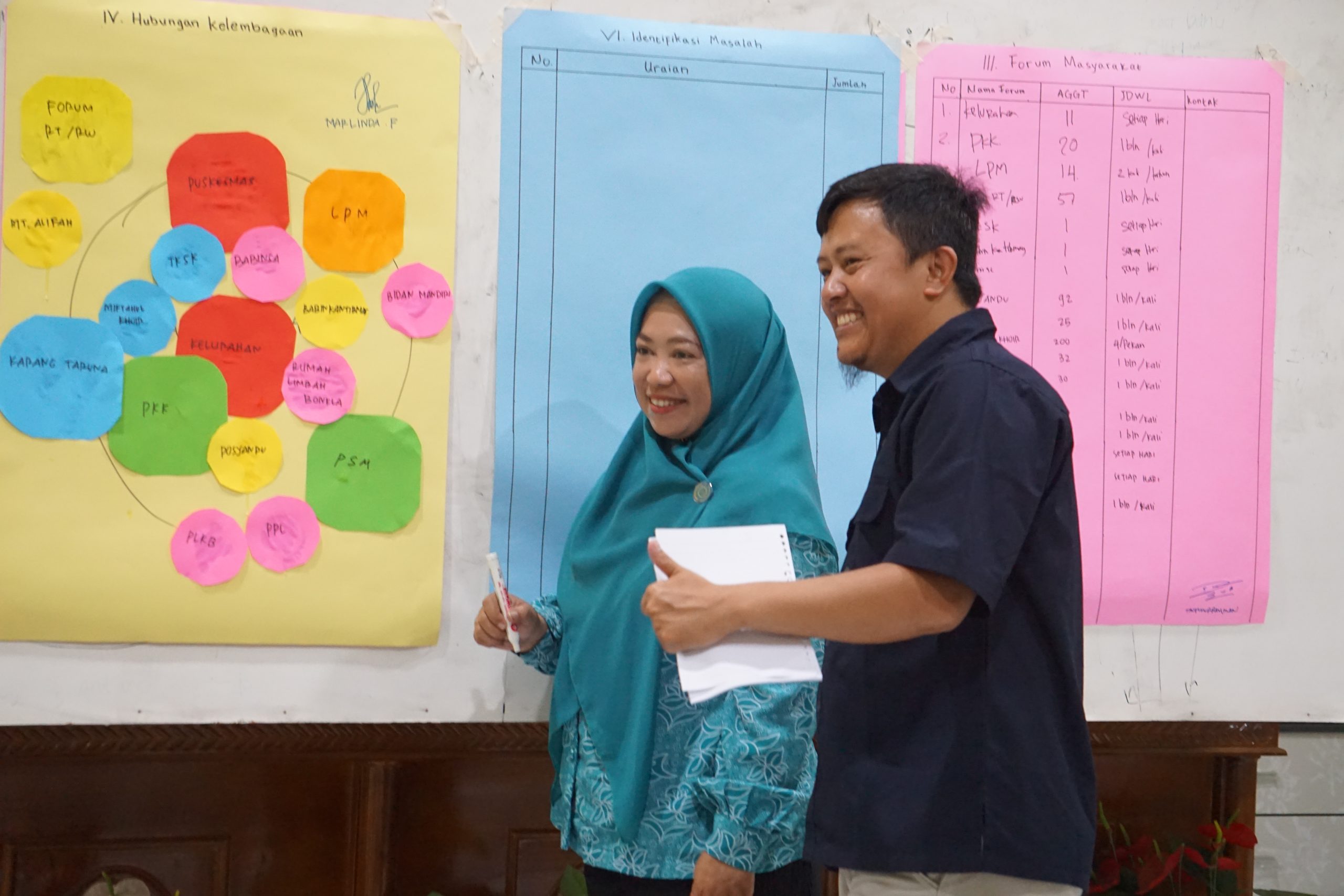
(Simplified Social Mapping in Benhil Urban Village, Central Jakarta – PT PLN UIT JBB)
2. Rapid Assessment: Gaining Field Insights Efficiently
If social mapping is like creating a complete portrait, rapid assessment is the initial sketch before the painting begins.
Rapid Assessment often referred to as Rapid Rural Appraisal (RRA) is a method for gathering essential information quickly without relying on lengthy questionnaires or large-scale surveys. Using semi-structured interviews and field observations, practitioners can develop a reliable understanding of local conditions within a relatively short period.
The concept was first introduced by Robert Chambers in 1983 as a response to two common weaknesses in development research: formal surveys that were expensive and time-consuming, and brief field visits often called “rural development tourism” that produced superficial and biased observations.
Later, in Whose Reality Counts? Putting the First Last (1997), Chambers expanded the concept into Participatory Rural Appraisal (PRA), an approach that actively involves communities rather than treating them merely as research subjects.
The distinction is straightforward:
- RRA: External facilitators collect and analyze the information.
- PRA: Community members analyze, map, and assess their own conditions, while external facilitators provide guidance throughout the process.
Common rapid assessment techniques include semi-structured interviews, direct observation, and transect walks, where facilitators walk through the community with local residents to observe geographical conditions, infrastructure, and social interactions firsthand.
3. Focus Group Discussion (FGD): Listening to Collective Perspectives
While in-depth interviews capture the opinions of individuals, Focus Group Discussions (FGDs) explore the collective perspectives of a group.
Richard Krueger and Mary Anne Casey, in Focus Groups: A Practical Guide for Applied Research (2000), define an FGD as a structured discussion involving a small group of participants typically eight to twelve people with similar backgrounds guided by a moderator to explore their perceptions, experiences, and opinions regarding a particular topic.
The real value of an FGD lies not only in individual responses but also in the interaction among participants. One opinion often triggers another, revealing areas of consensus, disagreement, and shared experiences that might never emerge through one-on-one interviews.
Within CSR programs, FGDs are commonly used to deepen findings from rapid assessments. Separate discussions may be held with farmers, women’s groups, youth, or other community representatives to better understand the challenges and priorities from each group’s perspective.
4. Stakeholder Mapping: Identifying Who Matters Most
The final assessment method addresses another critical question: beyond understanding community needs, who can influence or be influenced by the success of the program?
The concept of stakeholder mapping originates from stakeholder theory introduced by R. Edward Freeman in Strategic Management: A Stakeholder Approach (1984). Freeman argued that organizational success depends not only on shareholders but also on every stakeholder who has an interest in or is affected by the organization’s activities.
John M. Bryson later translated this concept into a practical planning tool in Strategic Planning for Public and Nonprofit Organizations (latest edition, 2018). He introduced the Power Interest Grid, which categorizes stakeholders into four groups:
- High power, high interest: key stakeholders who should be closely engaged.
- High power, low interest: stakeholders whose relationships should be carefully maintained.
- Low power, high interest: stakeholders who should be kept informed and involved.
- Low power, low interest: stakeholders who require periodic monitoring.
In CSR practice, stakeholder mapping enables companies to understand local power structures from village leaders and traditional authorities to community groups that may support or oppose the program allowing engagement and communication strategies to be designed more effectively from the outset.
Developing impactful CSR programs begins with a comprehensive assessment process, from social mapping to stakeholder mapping. Filantra is ready to support your organization with end-to-end, data-driven CSR assessments that provide a strong foundation for sustainable community development. Contact the Filantra team today to discuss your company’s CSR needs.