Collaboration Between PT Coca-Cola Europacific Partners Indonesia and Filantra in Strengthening the Rorotan Waste Bank for a Sustainable Environment
Partner : PT Coca-Cola Europacific Partners Indonesia
Industry : Food and Beverage (F&B)
Objective : As part of environmental commitment and efforts to support community-based waste management, PT Coca-Cola Europacific Partners Indonesia in collaboration with Filantra implemented the Waste Bank Supporting Facility Strengthening Program in Rorotan Urban Village. This program aims to enhance the operational capacity of the waste bank through the provision of adequate supporting facilities, encourage waste segregation practices at the source, and increase public awareness and participation in creating a cleaner, healthier, and more sustainable environment. In addition, the program is expected to reduce household waste volume while strengthening community empowerment through value-based waste management practices.
Challenges :
In the implementation of the Waste Bank Supporting Facility Strengthening Program in Rorotan Urban Village, several challenges were identified in promoting effective and sustainable community-based waste management. These challenges are important considerations, as successful waste management depends not only on supporting facilities but also on community behavior and participation. The challenges include:
- Low community habit of sorting waste at the household level.
- Most household waste is still mixed between organic and inorganic waste.
- Limited facilities and infrastructure to support waste bank operational activities.
- Lack of public understanding regarding sustainable waste management and its environmental impact.
- Increasing daily waste generation in urban areas each year.
- Suboptimal integration between community-based waste management systems and large-scale waste processing facilities such as the Rorotan RDF Plant.
Solutions :
To address these challenges, the program implemented several interventions aimed at strengthening community-based waste management and improving waste bank operations. The solutions include:
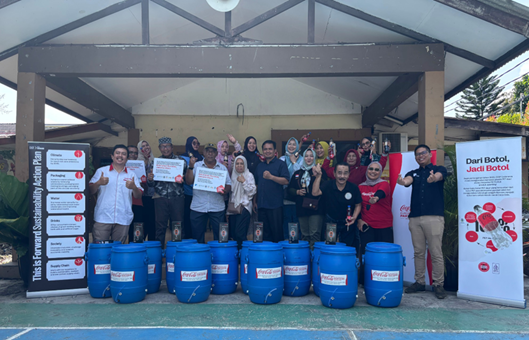
- Provision of 12 composting units to support the processing of household organic waste into useful products.
- Distribution of 12 digital weighing scales to improve the efficiency and accuracy of waste bank operations.
- Distribution of 96 “waste sorting at home” stickers as an educational tool to encourage household waste segregation.
- Strengthening waste bank operational capacity through improved facilities and supporting infrastructure.
- Encouraging active community participation in sustainable waste management practices.
- Supporting the reduction of household waste volume before it enters transportation and final processing systems.
Program Impact :
Through the implemented solutions, the program is expected to generate positive and sustainable impacts for both the community and the environment. Beyond improving waste management effectiveness, the program also aims to raise public awareness on the importance of environmental care through simple actions starting from households. The expected impacts include:
- Increased community awareness on the importance of waste segregation and household waste management.
- Reduction of mixed waste volume entering transfer stations and processing facilities.
- A cleaner, healthier, and more organized environment in Rorotan Urban Village.
- Improved operational effectiveness of the waste bank in managing community waste.
- Increased active participation of the community, especially women environmental groups, in sustainable waste management activities.
- Strengthened urban waste management systems that are more environmentally friendly and sustainable.
SDGs Relevance :
The Waste Bank Supporting Facility Strengthening Program in Rorotan is aligned with several Sustainable Development Goals (SDGs), including:
- SDG 11 – Sustainable Cities and Communities
The program supports community-based waste management through the provision of waste bank supporting facilities to create cleaner and more sustainable urban environments. - SDG 12 – Responsible Consumption and Production
Through waste segregation and household waste management practices, the program encourages responsible consumption behavior and waste reduction. - SDG 13 – Climate Action
Waste reduction at the source contributes to minimizing environmental impacts and supports emission reduction from the waste sector.
Waste is Not the End, But the Beginning of a Better Environmental Change
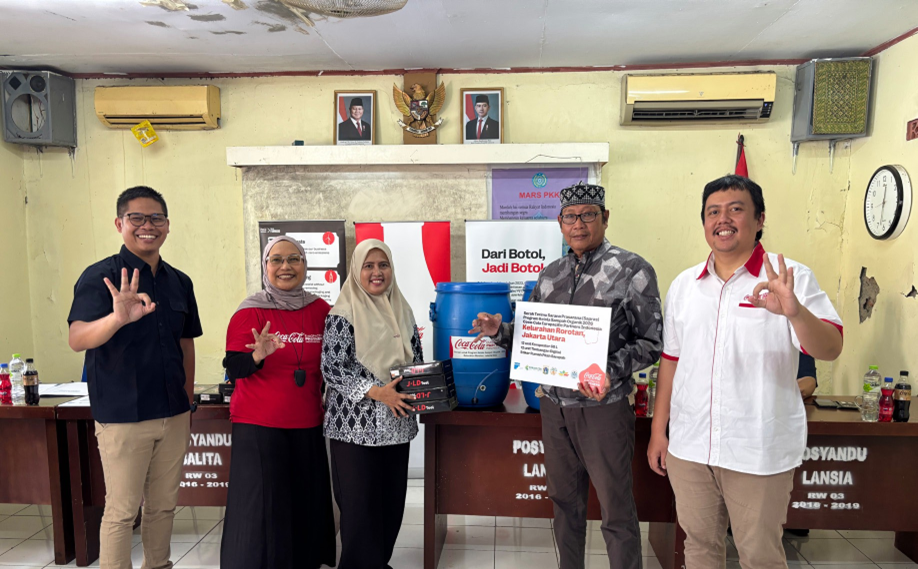
Urban waste issues remain a persistent challenge faced by communities. However, amid increasing household waste generation, awareness to create a cleaner and more sustainable environment is gradually growing through simple community-based actions. Through the Waste Bank Supporting Facility Strengthening Program in Rorotan Urban Village, tangible support is provided in the form of waste bank operational facilities to encourage waste segregation at the source and strengthen community-based waste management.
This program serves as a concrete step toward building a cleaner, healthier, and more sustainable environment through strengthened community participation in waste management. Together with Filantra, this social collaboration is expected to foster environmentally responsible habits, reduce urban waste generation, and create meaningful social and environmental impacts for the wider community.