
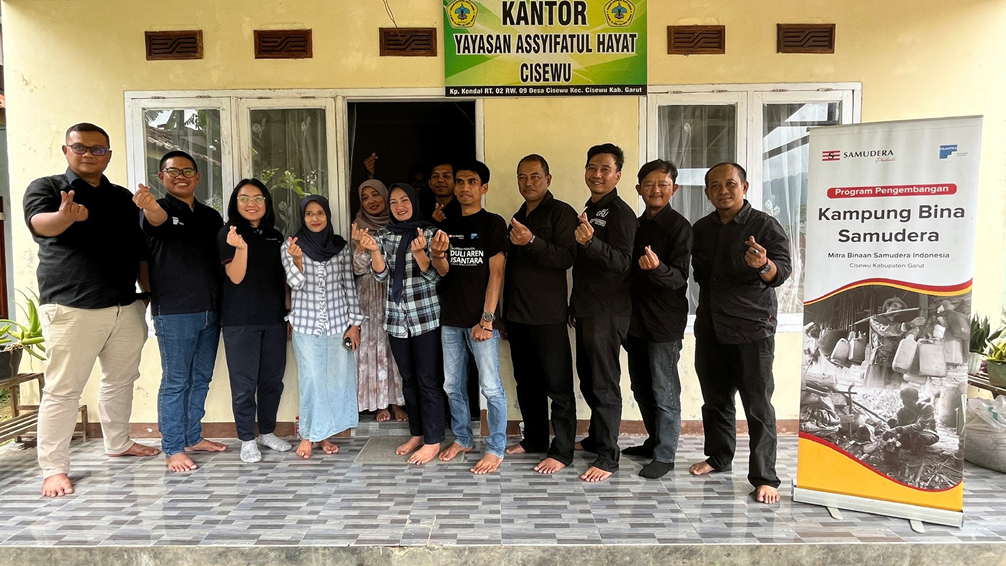
Driving Village Economic Independence through Mentorship and Sustainable Collaboration
Partner : PT Samudera Indonesia
Industry : Shipping
Objective : The 2nd Year of the Kampung Bina Samudera Cisewu Program focuses on institutional strengthening and business sustainability for palm sugar producers and farmers in Cisewu District, Garut Regency. This program is implemented through sustainable mentorship involving local stakeholders, specifically the Department of Cooperatives and SMEs of Garut Regency. The second year of implementation emphasizes several main pillars, namely:
- Institutional strengthening through the formation and mentorship of cooperatives as a collective business entity.
- Increasing the business capacity of cooperative members, including administrative, financial, and business scale management.
- Development and diversification of palm sugar products to provide added value and competitiveness.
- Strengthening product marketing, covering digital marketing, participation in exhibitions, and the development of reseller and dropshipper networks.
Achievements and Activity Impacts :
Achievements and Impacts of the 2nd Year Kampung Bina Samudera Cisewu Program :
- Program Benefits and Participants The program reaches 25 beneficiaries, consisting of existing and new palm sugar farmers as well as sugar producers. The program focuses on 12 months of sustainable mentorship, including training in cooperative management, business administration, liquid palm sugar processing, and business presentations with local village authorities.
- Increase in Production and Profit Palm sugar production increased significantly, from 23,850 kg (2023) to 156,180 kg (2025). Collectors’ net profit increased nearly 4 times, while farmers’ profits rose by ±374.8% cumulatively. This increase indicates that the business is becoming more stable, developing, and having a tangible impact on community income.
- Institutional Strengthening and Business Capacity The formation and mentorship of cooperatives helped in managing administration, finance, and the cooperative office as a center of activities. Training and mentorship also strengthened members’ capacity in business scale, palm sugar product diversification, and marketing strategies, including participation in exhibitions and building reseller networks.
- Impact of Independence and Sustainability With the increase in production, income, and business management capacity, the program drives community economic independence and palm sugar business sustainability, while expanding the participation of new farmers in the local business chain.
Challenges :
In the implementation of the 2nd Year Kampung Bina Samudera Cisewu Program, there are several challenges to be faced. The differing levels of capacity and experience among beneficiaries mean that some new farmers and producers require more intensive mentorship in cooperative management, business administration, and liquid palm sugar processing. Limited production tools and supporting facilities are also factors that need to be anticipated. Furthermore, coordination with local stakeholders such as the Department of Cooperatives, SMEs, and village authorities sometimes requires schedule adjustments to ensure training and mentorship activities run smoothly. Another challenge is strengthening marketing and product market access, as well as ensuring the consistent participation of new farmers in every stage of the program.
Activity Solutions :
Based on the series of activities carried out and the achievements and impacts produced, the 2nd Year Kampung Bina Samudera Cisewu Program is designed to address the needs and challenges faced by farmers and palm sugar cooperatives. The activity solutions are structured in a targeted manner through mentorship, capacity building, and business institutional strengthening approaches, to ensure program sustainability and the sustainable improvement of palm sugar farmers’ welfare.
- Sustainable cooperative institutional mentorship Conducted to increase the institutional capacity of farmers and cooperatives so they can be managed in a more orderly, transparent, and accountable manner, thereby strengthening members’ trust in the cooperative.
- Training and mentorship in cooperative management Provided as a solution to the need for increased understanding of organizational management, administration, and cooperative governance so that cooperative operations run more effectively and professionally.
- Strengthening cooperative infrastructure Implemented to increase the operational efficiency of the cooperative, support the smooth running of business activities, and serve as the economic activity center for members.
- Development of liquid palm sugar products Serves as a solution to increase business added value through product diversification, so that farmers and collectors do not depend on only one type of product.
- Marketing training and exhibition participation Conducted to expand market access, increase sales volume, and strengthen the bargaining position of cooperative and member products in the market.
- Intensive production and marketing mentorship Carried out for 12 months as a solution to maintain consistent increases in production, marketing, and income for farmers and collectors sustainably.
- Optimization of resources (funds, HR, labor, and time) Utilized to ensure the entire series of activities runs effectively and provides a long-term impact on improving the welfare of palm sugar farmers.
SDG Relevance :
- SDG 1 – No Poverty
The 2nd Year Kampung Bina Samudera Cisewu Program is relevant to SDG 1, which aims to end poverty in all its forms everywhere. The program contributes to poverty reduction efforts through economic strengthening based on local potential. Sustainable mentorship, strengthening cooperative institutions, and expanding marketing access drive the gradual and sustainable increase in income for palm sugar farmers and producers.
- SDG 8 – Decent Work and Economic Growth
This program is in line with SDG 8, which aims to encourage inclusive and sustainable economic growth and the creation of decent work. The formation and management of cooperatives create a more organized, professional, and sustainable collective work ecosystem. Training in business management, marketing, and palm-based product development also supports local economic growth and the strengthening of village MSMEs.
- SDG 12 – Responsible Consumption and Production
The Kampung Bina Samudera Cisewu Program supports the achievement of SDG 12 by encouraging more orderly, quality, and sustainable production practices. The development and diversification of palm sugar products are carried out by paying attention to the wise use of local resources, supported by production standard mentorship and laboratory testing to ensure product safety and responsibility for consumers.
- SDG 17 – Partnerships for the Goals
The implementation of the program is aligned with SDG 17, which emphasizes the importance of multi-stakeholder partnerships. The program is run through collaboration between PT Samudera Indonesia, community cooperatives, implementing partners, and the local government. Synergy with the Department of Cooperatives and SMEs strengthens the aspects of legality and institutional governance, while expanding the impact and sustainability of the program in the long term.
Strengthening Local Potential Together for a Sustainable Future
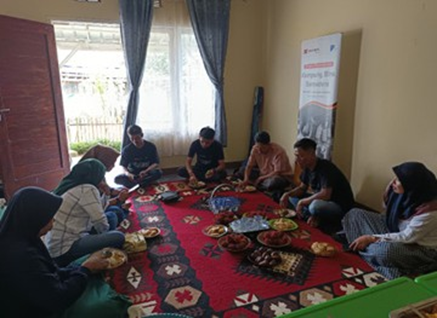
The Kampung Bina Samudera Cisewu Program is the result of collaboration in driving community economic strengthening based on local potential. Through sustainable mentorship, cooperative institutional strengthening, palm sugar business development, and synergy with local stakeholders, this program contributes to the increase of community capacity and economic independence at the village level.
Moving forward, expanding social impact requires broader and more sustainable collaboration. Filantra opens collaboration opportunities for companies and strategic partners to jointly develop community empowerment programs that are measurable, sustainable, and have a tangible impact on local economic welfare.