
Community Empowerment Collaboration to Build a Sustainable Coastal Economy in Muara Angke through Catfish Aquaculture
Partner : PT Pertamina Nusantara Regas
Industry : Energy
Objective : The Muara Angke Catfish Cultivation Program (Muke Bule) aims to improve the welfare and economic independence of the Muara Angke coastal community through the development of catfish aquaculture businesses carried out in a targeted, measurable, sustainable manner, and based on community participation. This program is designed as a strategic effort to provide a more stable alternative livelihood amidst the decline in capture fisheries and the high dependence of the community on the traditional fisheries sector, which is increasingly uncertain due to environmental and weather changes.
Specifically, this activity aims to increase the community’s knowledge and skills in managing catfish aquaculture, covering technical, managerial, and harvest marketing aspects. In addition to encouraging increased income, this program also opens up new business and employment opportunities for coastal communities, while strengthening collaboration between the community and the private sector, particularly PT Nusantara Regas, in supporting sustainable aquaculture-based socio-economic development that has a positive impact on the surrounding environment.
Program Implementation Challenges :
In its implementation, the Muara Angke Catfish Cultivation Program (Muke Bule) faces a number of challenges that need to be managed gradually so that the program can run optimally and sustainably. These challenges include:
- Limited aquaculture facilities and infrastructure Before the program started, the community still faced limitations in supporting facilities such as cages, pier safety fences, and cultivation equipment, which impacted the effectiveness of the catfish rearing process.
- Variation in the knowledge and skill levels of cultivators Not all community members have an adequate technical understanding of catfish aquaculture, ranging from pond management and feeding to water quality control, thus requiring intensive and sustainable assistance.
- The need for continuous assistance in business management In addition to technical aspects, the community still requires reinforcement in business management, record-keeping, and aquaculture development planning so that activities do not stop at the production stage alone.
- Strengthening group institutional capacity Community groups, including the Karang Taruna (Youth Organization), are still in the process of building solid governance and cooperation systems to be able to manage aquaculture businesses independently and professionally.
Solutions :
Addressing various challenges in the economic development of coastal communities, the Muara Angke Catfish Cultivation Program (Muke Bule) is designed as an integrated solution that targets not only technical production aspects but also the capacity building of human resources and community institutions. The program solutions are implemented through an integrated approach as follows:
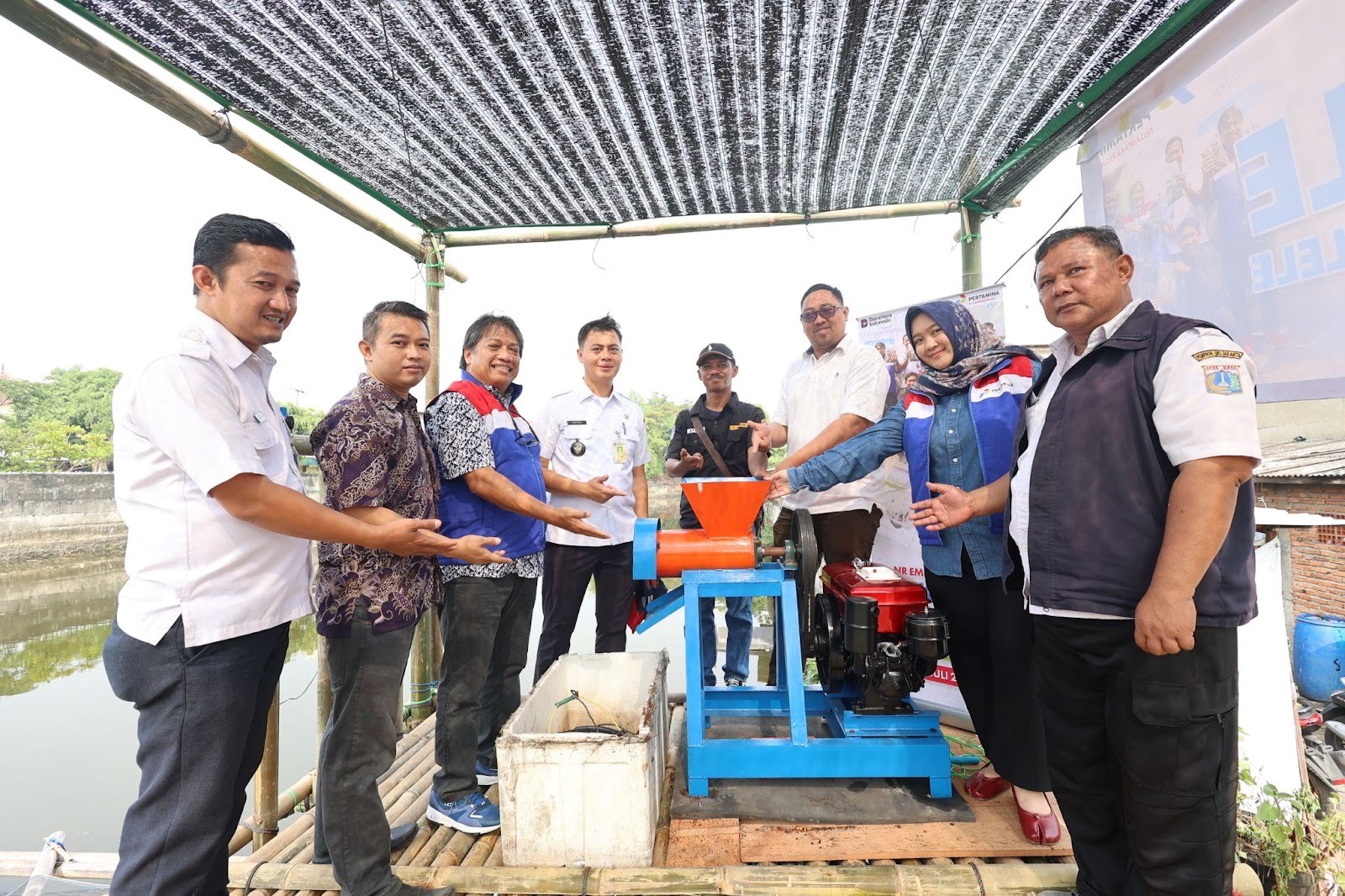
- Provision of adequate aquaculture facilities and infrastructure The program provides fish ponds, 4,000 catfish seeds, fish feed, pier safety fences, pier access repairs, feed-making machines, and feed raw materials to overcome cultivation facility limitations and support a more effective and standardized production process.
- Increasing technical capacity and cultivation quality To ensure safe and high-quality cultivation results, the program conducts laboratory testing for catfish (Salmonella and E. coli), independent feed-making training, and the development of fish feed production human resources to increase business efficiency and sustainability.
- Strengthening marketing aspects and business services The program equips the community with e-commerce training to expand the marketing reach of aquaculture products, as well as ethics and service (manner) training for offline fish shop attendants so that the business has competitive value and added value.
- Assistance in business planning and development Through Focus Group Discussions (FGD), the community is assisted in preparing an action plan for the development of the catfish aquaculture business so that activities run in a targeted, measurable, and sustainable manner.
- Strengthening institutional capacity and group governance The program encourages business sustainability through advocacy for institutional legality, including the formation of cooperatives, opening operational accounts, and processing MUI Halal and CBIB certifications, reinforced by training in governance, administration, and group management systems.
Program Impact :
The implementation of the Muara Angke Catfish Cultivation Program (Muke Bule) provides positive impacts felt gradually by the Muara Angke coastal community, in terms of economy, human resource capacity, and institutional strengthening. The impacts of the program include:
- Increased community capacity and skills The community has a better understanding of catfish aquaculture techniques, feed management, water quality, and the harvesting process, allowing cultivation activities to be carried out more effectively and sustainably.
- Opened opportunities for increased community income The catfish aquaculture business has become a source of additional income for the community, while simultaneously opening up new business opportunities that are more stable compared to dependence on capture fisheries.
- Increased economic independence of coastal communities With aquaculture-based business alternatives, the community has begun to reduce dependence on the capture fisheries sector and has livelihood options that are more adaptive to environmental and weather changes.
- Formation of stronger business governance and institutions Institutional strengthening through the formation of cooperatives, business legality, and management capacity building encourages community groups to manage businesses more professionally and sustainably.
- Increased competitiveness and sustainability of aquaculture businesses Support for marketing training, business services, and development planning helps cultivation products have added value and opportunities to reach a wider market.
Alignment with Sustainable Development Goals (SDGs) :
The Muara Angke Catfish Cultivation Program (Muke Bule) is aligned with several goals in the Sustainable Development Goals (SDGs) as follows:
- SDG 1: No Poverty This program helps increase the income and economic independence of coastal communities through the development of catfish aquaculture as a sustainable alternative livelihood.
- SDG 8: Decent Work and Economic Growth Through skill improvement, business assistance, and the opening of job opportunities in the aquaculture sector, this program encourages inclusive and productive local economic growth.
- SDG 14: Life Below Water By encouraging a shift from capture fisheries to aquaculture, this program contributes to efforts to reduce pressure on marine resources and supports more sustainable aquatic ecosystem management.
When Empowerment Becomes Social Investment
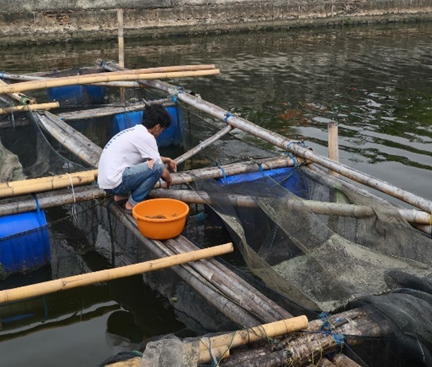
The Muara Angke Catfish Cultivation Program (Muke Bule) is a form of collaboration between Filantra and PT Nusantara Regas in driving the sustainable economic strengthening of coastal communities. Through a community-based empowerment approach, this program not only increases aquaculture productivity but also builds human resource capacity, group independence, and the economic resilience of the Muara Angke community.
This collaboration reaffirms the commitment of Filantra and PT Nusantara Regas to delivering targeted, measurable, and impactful social programs. Moving forward, Filantra continues to open collaboration opportunities for strategic partners to jointly develop community empowerment initiatives that are relevant, sustainable, and capable of creating positive change for society and the environment.