
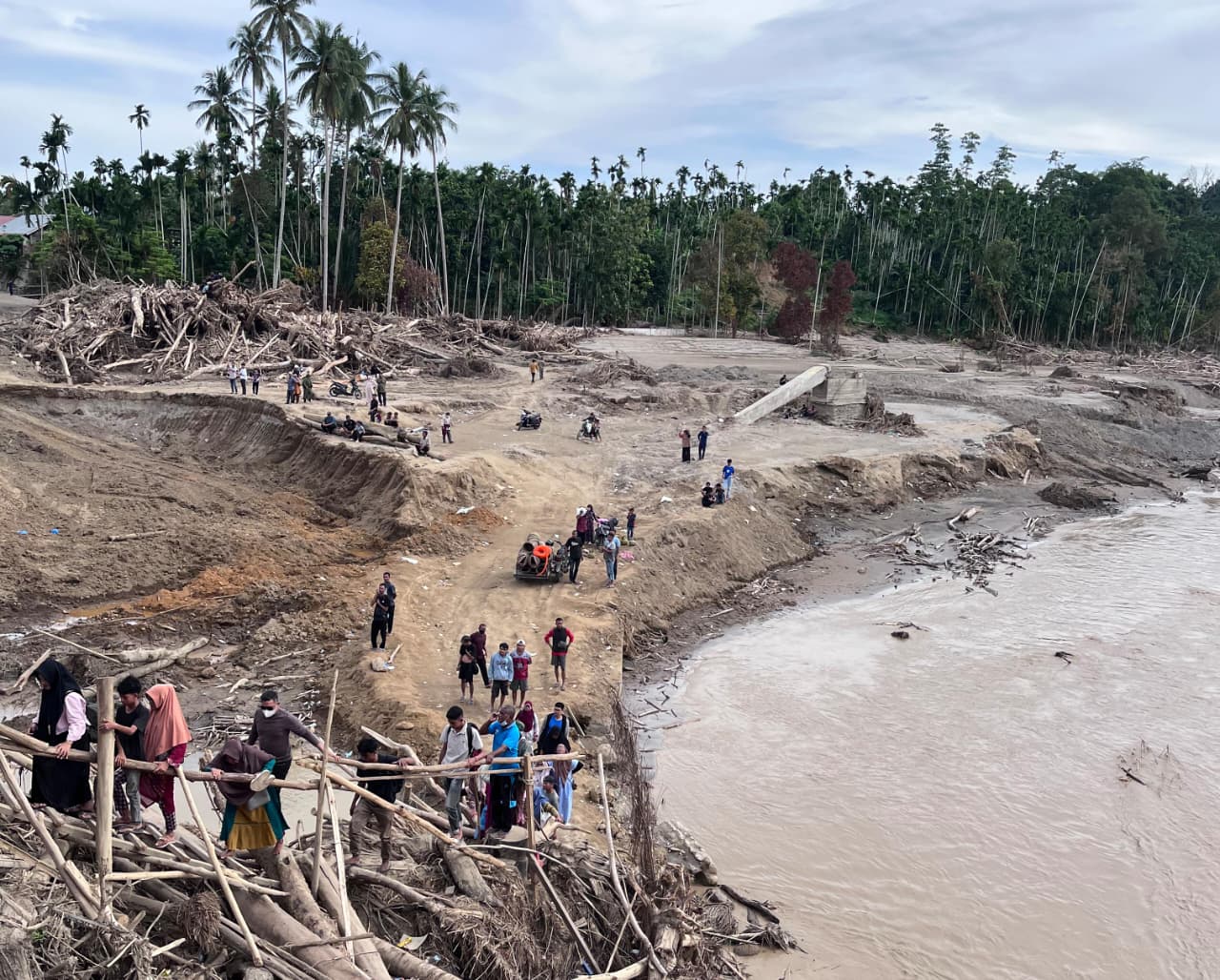
Healing Sumatra Post Disaster Through Collaboration and Care
Floods and landslides remain serious challenges across various regions of Sumatra. Based on updated data from the National Disaster Management Authority (BNPB) as of early 2026, Sumatra is recorded as one of the regions with the highest incidence of hydrometeorological disasters in Indonesia. The impact of these disasters is not only visible in physical and infrastructure damage but also in the disruption of the social, economic, and environmental lives of the community.
As the emergency response phase begins to pass, affected communities enter an equally crucial stage: post-disaster recovery. In this phase, needs are no longer limited to emergency aid but include the restoration of livelihoods, basic services, health, and the strengthening of community resilience to face future risks.
Disaster Risk and Environmental Pressure in Sumatra
Analysis from the Meteorology, Climatology, and Geophysics Agency (BMKG) through the 2025/2026 rainy season shows that the intensity of extreme rain in several areas of Sumatra remains high. Patterns of heavy rain with short durations increase the potential for flash floods and landslides, particularly in river basin areas and hilly regions.
On the other hand, the Ministry of Environment and Forestry (KLHK) notes that the reduction of forest cover and land-use changes are still occurring in several parts of Sumatra. This condition weakens the environmental carrying capacity and amplifies disaster risks. The combination of climate factors and environmental pressure emphasizes that post-disaster recovery cannot be separated from efforts to strengthen overall regional resilience.
Challenges of Post-Disaster Recovery
Post-disaster recovery in Sumatra faces multi-layered challenges. In addition to infrastructure damage, more than 195,000 people are recorded as displaced, while many communities have lost their livelihoods and experience limited access to basic services. BNPB notes that the social and economic impacts post-disaster often last longer than the emergency phase, thus requiring a planned and sustainable recovery approach.
Without a recovery strategy based on local context and disaster risk, communities have the potential to face similar impacts in the future.
Social Mapping as the Foundation of Recovery
Addressing these complexities, social mapping has become an important approach in post-disaster recovery. Through social mapping, the needs of the community, vulnerable groups, and local capacities can be identified more accurately. This approach ensures that recovery programs are not uniform but are relevant to the conditions and needs of each affected area.
Social mapping also encourages the active involvement of the community in the recovery process, ensuring that the results achieved are more sustainable and have a long-term impact.
Concrete Collaboration in Sumatra’s Post-Disaster Recovery
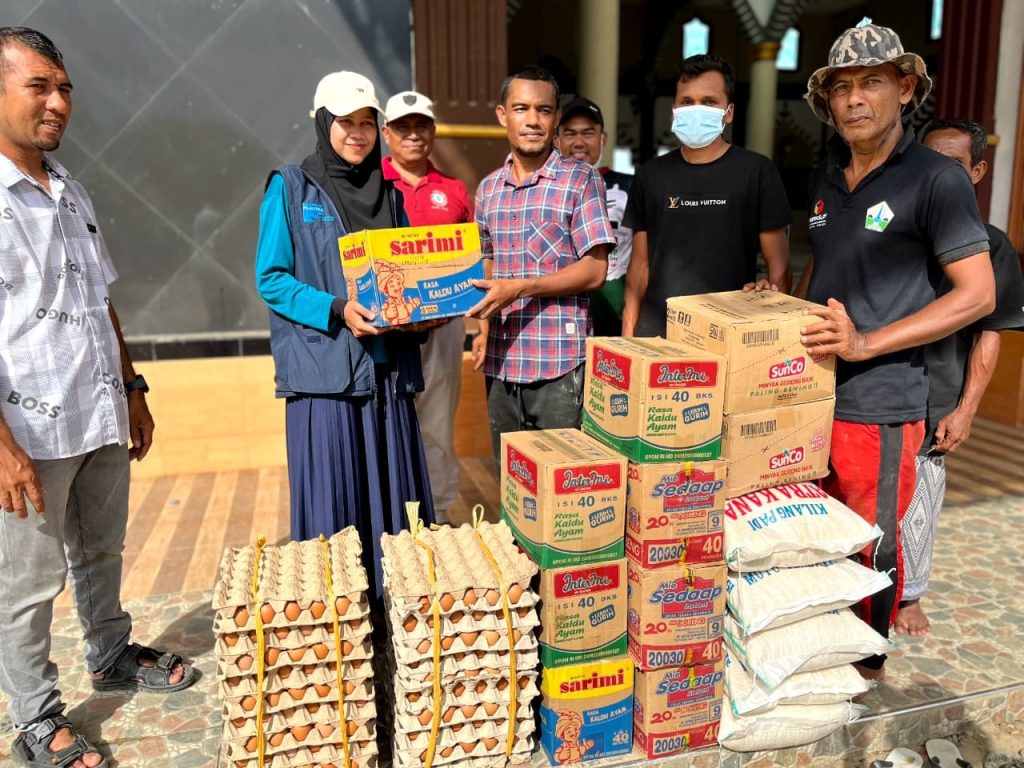
Amidst the immense need for recovery, cross-sector collaboration is the primary key. Filantra, together with corporate partners, is present to support the post-disaster recovery process in Sumatra through the distribution of various forms of assistance that meet the real needs of affected communities.
As part of the recovery efforts, the established collaboration has distributed 16 generator units and Starlink sets to support electricity and communication access in affected areas. Additionally, basic necessity aid has been distributed on a large scale, including 92,694 boxes of food supplies (sembako), 70,467 boxes of mineral water, and 19 tons of rice to support community food security during the recovery period.
Recovery efforts are also strengthened through health services and medical support. Filantra and its partners have provided health services across 15 locations, distributed 18,950 boxes of medicine, and supported the fulfillment of basic needs through ready-to-eat meals, community kitchen logistics, and hygiene kits. Additional aid in the form of baby kits, shelter kits, and the provision of emergency tents has also been distributed to reach vulnerable groups as part of an inclusive recovery approach.
This variety of assistance reflects that post-disaster recovery requires planned and sustainable synergy not only to answer short-term needs but also to build the foundation of community resilience.
From Recovery Toward Long Term Resilience
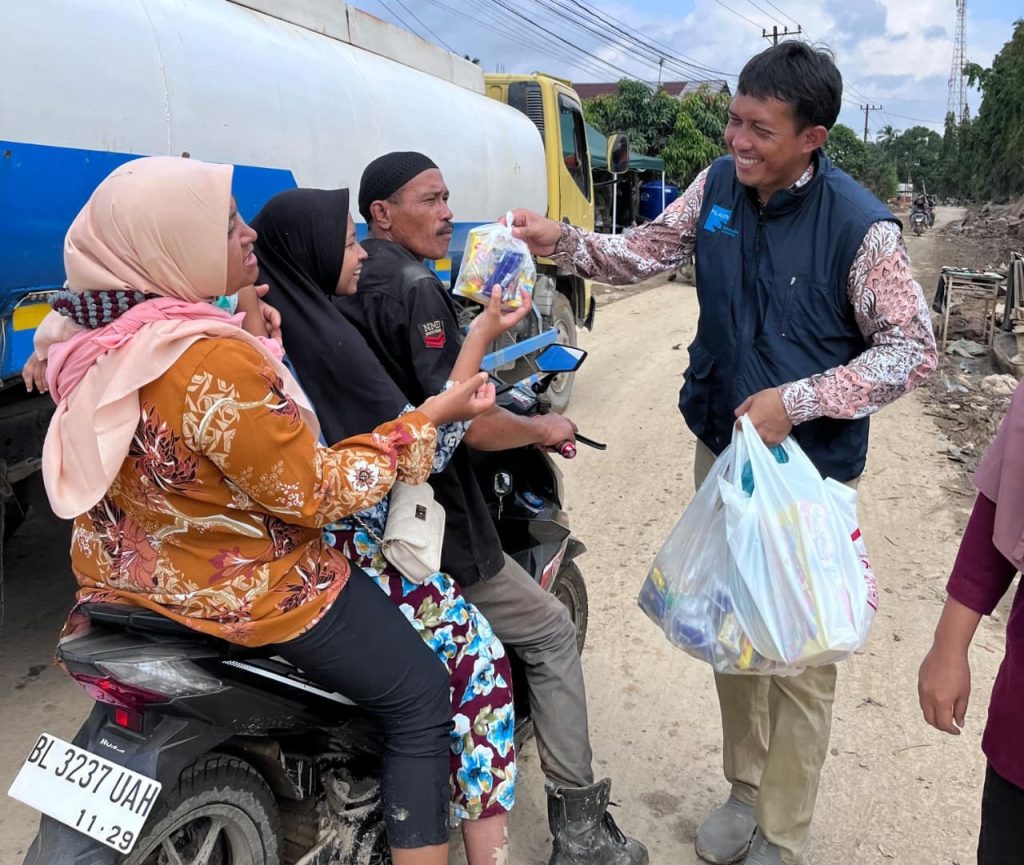
Post-disaster recovery is a momentum to “build back better.” The principle of Build Back Better, as emphasized in the Sendai Framework for Disaster Risk Reduction 2015–2030, asserts that recovery must strengthen community resilience rather than simply returning to the pre-disaster state.
Integrated recovery covering social, economic, and environmental aspects is a vital step to reducing the risk of recurring disasters and strengthening the preparedness of communities in disaster-prone regions like Sumatra.
Uniting Care for Sustainable Recovery
Post-disaster recovery in Sumatra requires cross-sector synergy capable of meeting the real needs of the community in a targeted manner. In this process, Filantra acts as a strategic partner bridging the concern of various parties with the needs on the ground through a data-driven approach, social mapping, and transparent and accountable program governance.
The collaboration built with the business world is an essential part of driving long-term recovery aligned with sustainability commitments. Through planned collaboration, post-disaster recovery is not just a response to a crisis, but a collective step to build a stronger resilience for the people of Sumatra in the future.