Collaborative Efforts of Filantra and BDx Data Centers Indonesia in Supporting Food and Clean Water Access for Flood Survivors in Sumatra
Partner : BDx Data Centers Indonesia
Industry : Data Center Infrastructure
Program Background :
Floods occurring in several regions in Sumatra resulted in the disruption of community access to basic needs, particularly clean water distribution. During the emergency response phase, logistical limitations and unfavorable environmental conditions increased the vulnerability of the affected communities.
In response to these conditions, Filantra together with BDx Data Centers Indonesia implemented an emergency response program focused on fulfilling the basic needs of flood-affected communities. This program was designed to provide direct support during the emergency period with an approach that is adaptive to the field dynamics in each region.
Program Objectives and Targets :
This program aims to ensure that flood-affected communities maintain access to food and clean water throughout the emergency response period. Additionally, the program is directed toward helping maintain the basic resilience of survivors amidst emergency conditions, especially in areas with limited logistical access and resources. The program targets flood-affected communities in several cross-provincial districts in Sumatra, with priority given to areas experiencing prolonged impacts and limited access to basic necessities.
Series and Forms of Activities :
The program implementation was carried out through several integrated main activities, including:
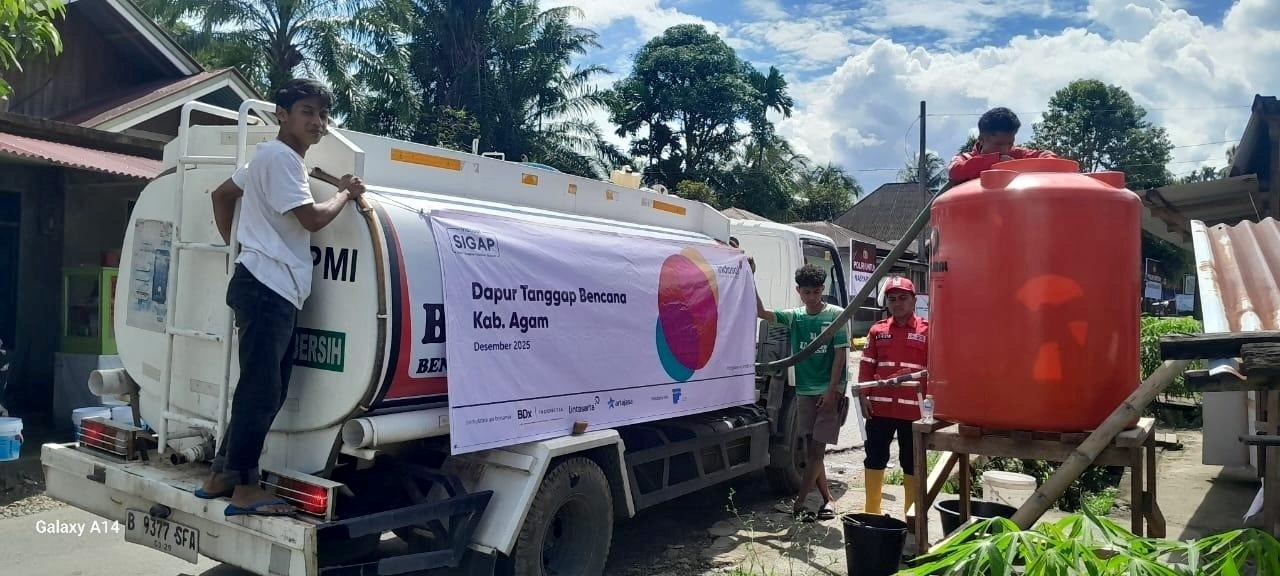
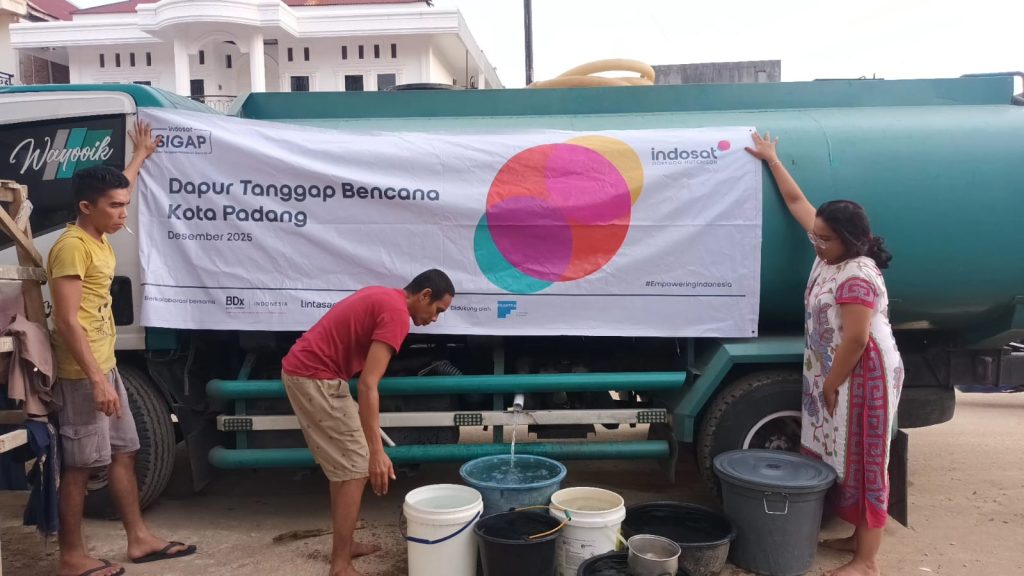
- Distribution of clean water in four areas with limited access to consumable water.
- Involvement of field PICs and local volunteers in the kitchen operational processes, aid distribution, and coordination with the local community. This approach allowed aid to be distributed directly and sustainably according to the needs and conditions in each affected location.
Implementation Period, Region, and Program Scale :
The program was implemented from December 18, 2025, to January 12, 2026, with different implementation durations at each location adjusting to the level of flood impact and the needs of the local community. Overall, the activities reached:
- Four clean water distribution points in priority areas, and during the implementation period, the program successfully distributed 64,000 liters of clean water. Several regions with longer-lasting flood impacts, such as Aceh Tamiang and Pidie Jaya, received support with durations and volumes adjusted to field requirements.
Implementation Approach and Field Dynamics :
The program was implemented with a rapid and adaptive response approach, considering the dynamic field conditions and different characteristics in each affected region. Clean water distribution operations were carried out flexibly while prioritizing coordination, safety, and accountability. Location PICs and local volunteers played an important role in supporting the smoothness of activities, ranging from the cooking process and aid distribution to technical adjustments in the field so that activities could continue amidst the limitations of emergency conditions.
Challenges in Program Implementation :
In its implementation, the distribution of clean water was not free from various constraints arising from geographical conditions and the dynamics of the emergency situation in the field. ini memengaruhi proses distribusi dan menuntut penyesuaian agar bantuan tetap dapat menjangkau masyarakat terdampak secara optimal, antara lain:
- Limited access to affected locations, primarily due to floodwaters that had not receded and damaged road conditions, preventing water transport vehicles from reaching some areas directly.
- Limited sources of consumable water in affected locations, requiring water to be brought from further points and necessitating additional logistical arrangements.
- Non-centralized distribution of affected communities, with displaced persons located at several points and some still remaining around their settlements, requiring clean water distribution to be carried out across many locations.
- Rapid changes in field conditions, including the rise and fall of water levels and uncertain weather, which affected the schedule and volume of clean water distribution.
- Potential risks of follow-up disasters, such as the threat of landslides in certain areas, requiring route adjustments and additional security during the distribution process.
Program Impact for the Community
The provision of clean water through this program helped affected communities meet basic needs during the most critical post-disaster phase, especially in areas with limited access to consumable water. This support played a vital role in maintaining the basic resilience of survivors during the emergency response period. The collaboration between Filantra, BDx Data Centers Indonesia, field PICs, and local volunteers also strengthened the collaboration-based emergency response, ensuring that clean water distribution could be carried out in a more coordinated manner and tailored to the needs of the community in each location.
Alignment with Sustainable Development Goals (SDGs)
The implementation of this program is in line with efforts to achieve the Sustainable Development Goals (SDGs), specifically:
- SDG 6 – Clean Water and Sanitation, through the distribution of clean water in areas with limited access to consumable water. This alignment reflects the program’s contribution to supporting the fulfillment of basic community needs in emergency situations.
Collaboration for Response and Recovery
The implementation of this program demonstrates that cross-party collaboration plays an important role in ensuring that emergency responses run effectively and relevant to field needs. Support from corporate partners allowed for the operation of public kitchens and clean water distribution to reach affected communities during the most crucial phase. Filantra encourages collaboration with corporate partners and stakeholders to strengthen humanitarian responses and support the development of further initiatives in the recovery phase, ensuring that support for affected communities can proceed gradually and in a targeted manner.